
What Are You Looking For?

Why Your CIJ Printer Needs Regular Filter Replacements (And What Happens If You Don't)
I. Why is it necessary to replace filter elements regularly?
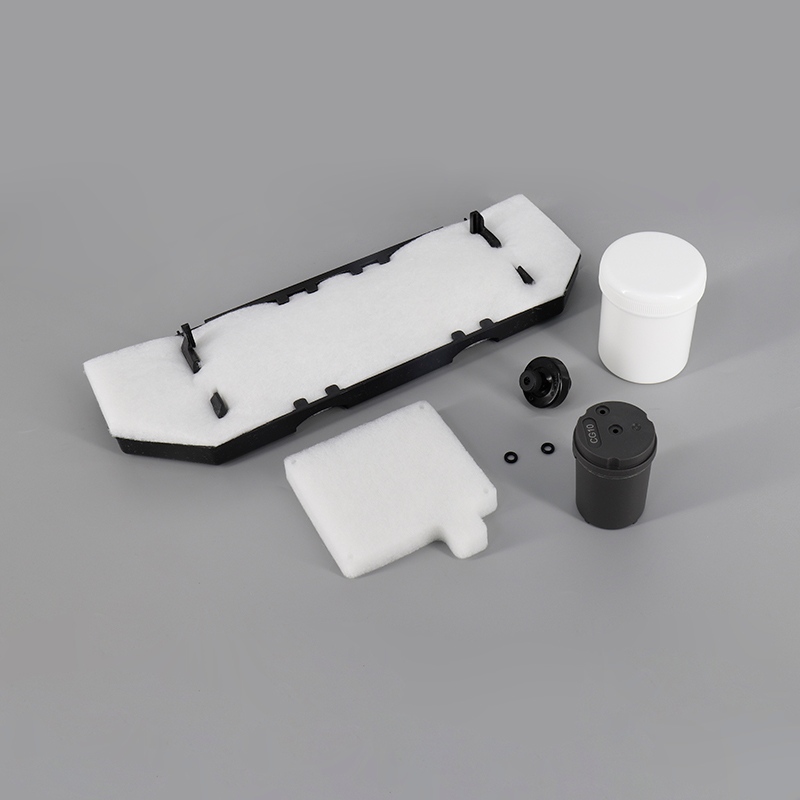
1.Filtering various impurities within the ink path
CIJ inks are fast-drying chemical substances; during their continuous circulation, they inevitably generate various types of contaminants
Solid Particles: Residual pigment particles from the ink manufacturing process, tiny debris flaking off the inner walls of the tubing, and gel-like precipitates resulting from ink degradation.
Foreign Impurities: Dust and container fragments introduced during the replenishment of ink or solvent, as well as airborne dust from the surrounding environment that infiltrates the ink path.
Metal Shavings: Minute metal particles generated by the long-term wear and tear of moving components, such as ink pumps and solenoid valves.
The primary function of the filter element is to intercept these impurities, ensuring that the purity of the ink entering the printhead exceeds 99.9% and preventing damage to precision components.
2. Maintaining stable ink path pressure
CIJ coding machines rely on an ink pump to provide stable pressure, enabling the ink to be ejected at a constant velocity through a 70–100 μm nozzle to form ink droplets. Under normal operating conditions, the pressure differential across the filter element is typically less than 0.5 bar; however, as the filter element gradually becomes clogged, resistance within the ink path increases. This leads to fluctuations in ink pressure, which directly compromises the stability and quality of the printing output.
3. Extending the service life of core components
Core components—such as the printhead (including the nozzle, deflection plates, and charge electrode), ink pump, and solenoid valves—account for over 60% of the equipment's total cost. By intercepting impurities, the filter element prevents these precision components from being scratched, worn down, or clogged, thereby extending the overall service life of the equipment by 30% to 50%.
4. Ensuring stable ink performance
In certain high-end equipment, filter elements are also designed with the capability to filter out moisture and adsorb ionic impurities. This prevents issues such as increased viscosity, abnormal conductivity, or altered drying rates caused by ink contamination, thereby maintaining the chemical stability of the ink.
II. Consequences of Failing to Replace Filter Elements in a Timely Manner
1. Minor Faults (Early Stage of Clogging; Overdue by 1–2 Months)
Degraded Print Quality: Issues arise such as blurry characters, missing strokes, broken lines, and uneven dot placement; phase detection errors occur frequently, requiring repeated parameter adjustments to keep the device barely operational.
Frequent Nozzle Clogging: Tiny impurities obstruct the nozzle orifice, causing the ink stream to deviate and fail to enter the gutter; a nozzle cleaning procedure is required every time the device is powered on, severely impacting production efficiency.
Increased Solvent Consumption: To maintain ink viscosity, the device automatically increases solvent injection; solvent consumption rises by 20%–30% above normal levels, leading to a significant increase in operating costs.
2. Moderate Faults (Mid-Stage of Clogging; Overdue by 3–4 Months)
Ink System Failure: Once the filter element becomes completely clogged, insufficient ink pressure leads to an interruption in ink supply; the device frequently triggers "Low Ink Pressure" error alerts and cannot be powered on normally.
Gutter System Clogging: Impurities carried by the ink enter the return line, causing a reduction in suction within the gutter; this results in issues such as ink leakage from the printhead and ink splashing, thereby contaminating the production line and products.
Excessive Ink Pump Load: The ink pump is forced to overcome increased resistance to maintain the ink supply; prolonged operation under such high loads accelerates pump body wear, increases operational noise, and reduces the pump's service life by more than 50%.
3. Severe Malfunctions (Advanced Clogging, Overdue by More Than 6 Months)
Irreversible Printhead Damage: If hard metal particles or impurities enter the printhead, they can scratch the inner walls of the nozzle, the charging slot, and the surface of the deflection plates. This leads to abnormal ink droplet charging and print misalignment, necessitating the replacement of the entire printhead assembly (repair costs range from approximately 10,000 to 30,000 RMB).
Ink System Failure: The accumulation of large quantities of impurities within the tubing, solenoid valves, and pressure sensors can cause the entire ink circulation system to become clogged. This requires the complete disassembly and cleaning of all tubing; in severe cases, the entire ink system must be replaced, with repair costs potentially reaching up to 70% of the equipment's original value.
Risk of Production Stoppage: Equipment malfunctions can bring production lines to a halt. This is particularly critical in indus

Leave A Message
Scan to Wechat :

Scan to WhatsApp :

 English
 Pусский
 Español
 Português
 العربية
 فارسی
فارسی




 IPv6 network supported