
What Are You Looking For?
Why Empty CIJ Cartridges Are Gaining Popularity in Custom Ink Solutions
An in-depth analysis of cost, flexibility, supply chain resilience, and sustainability driving the shift from OEM to custom-filled cartridges in industrial coding and marking.
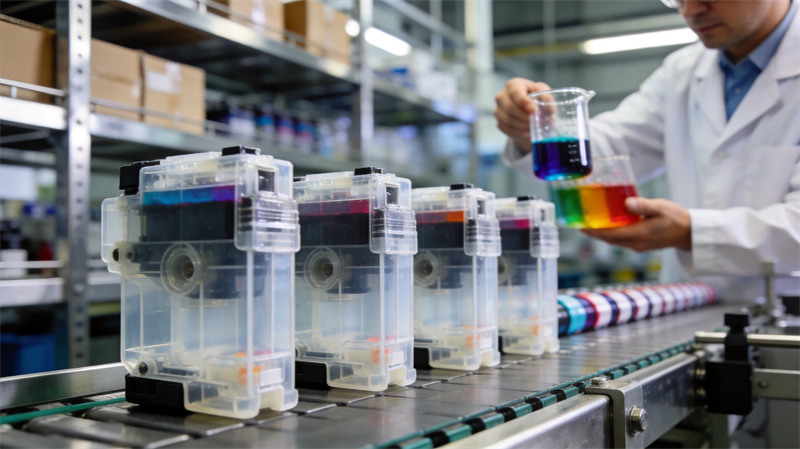
Continuous Inkjet (CIJ) technology remains the dominant method for industrial product identification—from expiry dates and batch codes on food packaging to UDI traceability codes on medical devices. In recent years, a notable trend has emerged: manufacturers increasingly turning to empty CIJ cartridges filled with custom-formulated inks rather than relying solely on OEM pre-filled cartridges. This report examines the key drivers behind this shift.
The industrial inkjet market has long operated on a "razor-and-blades" model: the printing equipment is sold at relatively accessible prices, while proprietary inks and solvents generate recurring high-margin revenue for OEMs. Original CIJ ink cartridges typically cost 2 to 3 times more than third-party alternatives, making them a substantial long-term expense for high-volume operations.
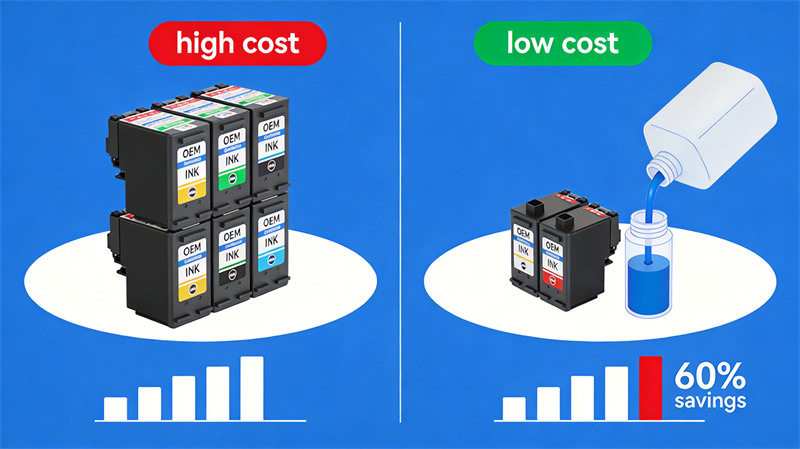

Empty cartridges enable a fundamental cost decoupling: the physical container (the cartridge body) is procured separately from the consumable fluid (the ink). This separation delivers compounding savings over time, particularly for production lines processing tens or hundreds of thousands of units daily. Bulk ink procurement further drives down per-unit costs compared to the premium pricing embedded in sealed OEM cartridges.
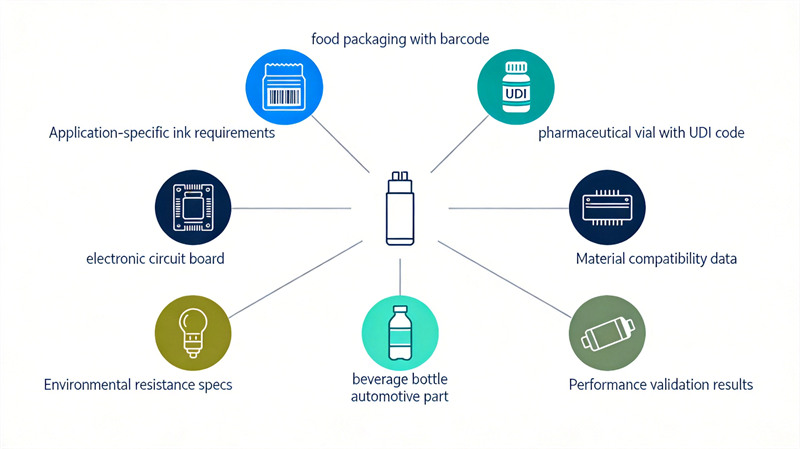
The single most compelling advantage of Empty CIJ cartridges is the freedom they provide to formulate and inject application-specific custom inks. OEMs typically offer a limited portfolio of standard ink products, which cannot address the full diversity of industrial marking requirements.
| Industry / Application | Key Custom Ink Requirements |
|---|---|
| Food & Beverage Packaging | Food-contact safety certifications (FDA, EU 10/2011), low migration, fast dry on porous substrates |
| Pharmaceutical / Medical Devices | UDI traceability compliance, sterilization resistance, strong adhesion on glass and Tyvek |
| Electronics & Semiconductors | Halogen-free, low corrosivity, non-conductive, precise droplet formation |
| Outdoor / Building Materials | UV resistance, waterproof durability, pigment-based long-lasting color |
| High-Speed Production Lines | Ultra-fast drying times, optimized viscosity for high-frequency jetting |
| Automotive Components | Heat resistance, chemical resistance to oils and coolants, metal adhesion |
Custom ink formulators can precisely tune parameters including viscosity, surface tension, conductivity, particle size, drying speed, adhesion strength, and color properties to match the exact requirements of each application—a level of tailoring that OEM standard product lines simply cannot achieve.
Major CIJ manufacturers—including Videojet, Domino, Linx, Markem-Imaje, and Keyence—have historically employed various strategies to maintain captive consumables revenue:
Empty cartridges from third-party suppliers provide an effective counter-strategy. These manufacturers invest in reverse engineering to produce compatible empty cartridge bodies that match OEM specifications for dimensions, interfaces, and electronic components, empowering users to choose their preferred ink source independently.
"The EU Consumer Rights Directive and similar regulations worldwide have clarified that manufacturers cannot legally deny warranty coverage solely because a customer uses third-party consumables, provided those consumables meet applicable standards."
Recent years have exposed vulnerabilities in global supply chains—geopolitical disruptions, logistics bottlenecks, and raw material shortages have compelled manufacturers to rethink their dependency on single-source consumable suppliers. The Empty cartridge model offers several strategic advantages:
Companies can stockpile empty cartridges independently of ink supplies, maintaining buffer inventory without the shelf-life constraints of pre-filled cartridges.
In-house or regional ink blending capabilities shorten lead times from weeks to days, eliminating cross-border shipping delays.
When specific ink components become scarce, formulation chemists can rapidly adjust recipes—a flexibility impossible with sealed OEM products.
Empty cartridge supply can be diversified across multiple manufacturers, eliminating single-point-of-failure risks in production line continuity.
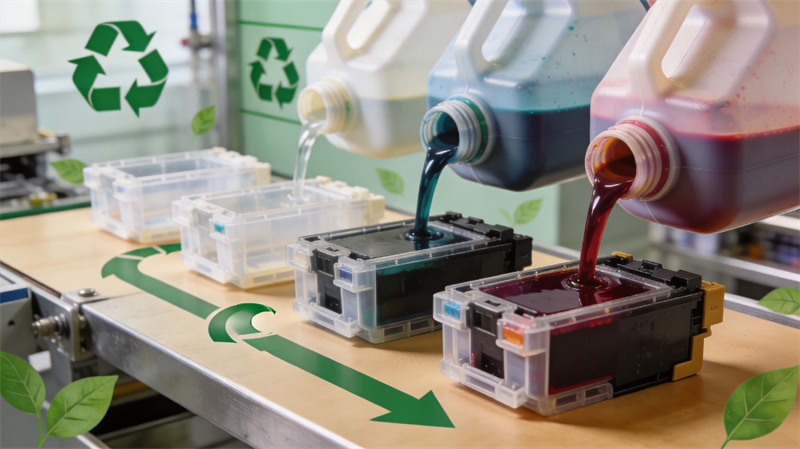
The environmental case for Empty CIJ cartridges is increasingly compelling within the context of corporate ESG (Environmental, Social, and Governance) commitments:

Leave A Message
Scan to Wechat :

Scan to WhatsApp :

 English
 Pусский
 Español
 Português
 العربية
 فارسی
فارسی




 IPv6 network supported