Leave A Message
Leave A Message
If you are interested in our products and want to know more details,please leave a message here,we will reply you as soon as we can.
submit
Blog Center
Home Blog Center

Why Do CIJ Inkjet Ink Consumables Affect Print Quality So Much?

Why Do CIJ Inkjet Ink Consumables Affect Print Quality So Much?

Jul 13, 2026


Why Do CIJ Inkjet Ink Consumables Affect Print Quality So Much?

Understanding the direct link between ink chemistry, consumable quality, and the codes your customers read

Technical Guide · CIJ Print Quality · 6 min read
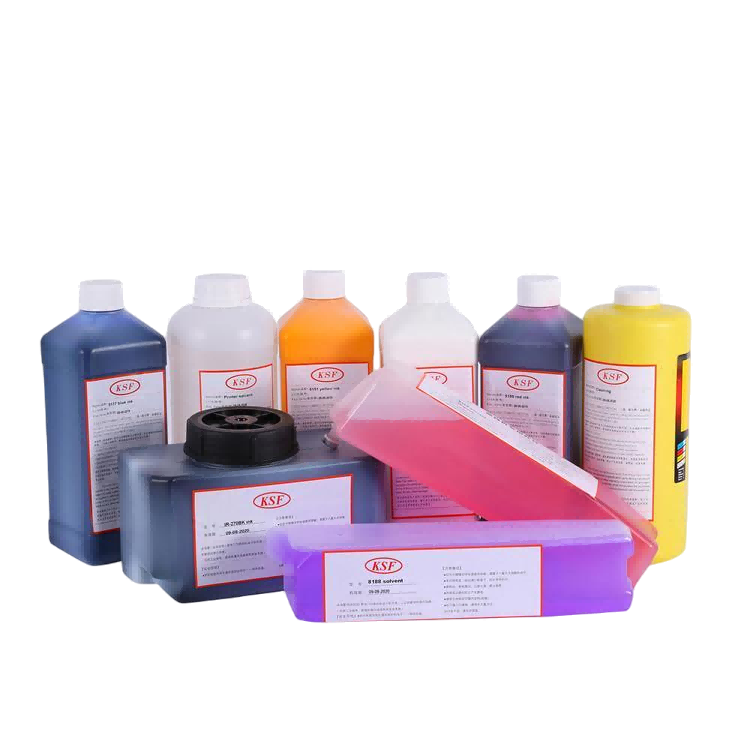
1. Why Ink Is the Heart of the System

A CIJ printer is a precision instrument that handles ink as both the marking material and the working fluid. The ink must do three things perfectly, every millisecond:

  • Flow through a 50-70 micron nozzle without clogging or starving
  • Break into uniform droplets at 60,000-150,000 drops per second
  • Carry an electrostatic charge precisely to land in the right position

If the ink's physical or chemical properties drift even slightly, every one of these steps is affected. That is why ink choice is the single most important factor in CIJ print quality.

Key point: Unlike a desktop printer where the cartridge is a sealed unit, CIJ ink is recirculated through the system. The ink must remain stable through thousands of cycles, exposure to air, and continuous interaction with the printhead.

2. Six Ways Ink Quality Affects Print

1. Viscosity — The Most Critical Parameter

CIJ printers rely on precise viscosity to form consistent droplets. Typical operating range is 2-10 centipoise (cP).

  • Too thick: Ink breaks into large, slow drops → characters look dark and bloated, edges merge together
  • Too thin: Ink splatters into satellite droplets → blurry edges, missing dots, illegible codes

2. Conductivity — How the Drop Gets Charged

CIJ printers charge each droplet electrostatically to deflect it into position. Conductivity must stay within a narrow range (typically 500-1500 μS/cm).

  • Too low: Drops don't charge enough → weak deflection, characters appear compressed or shifted
  • Too high: Overcharging → ink spreads, characters distorted, print position unstable

3. Drying Speed — Smudge or No Smudge

The ink must dry before the product reaches the next handling point. If it dries too slowly, codes smudge during packing or conveying. If it dries too fast, ink can dry inside the nozzle and cause clogging.

The solvent blend in the ink determines drying time. MEK-based inks dry fastest; alcohol and water-based inks are slower.

4. Pigment vs Dye — What You See

Dye inks dissolve completely, giving transparent, vibrant color. Pigment inks are solid particles that sit on the surface.

  • Dye: Great for porous substrates, but fades in UV and can wash off
  • Pigment: Durable, UV-resistant, rub-resistant. But can settle over time, causing inconsistent density if not properly circulated

5. Contamination — The Silent Killer

Even microscopic particles in the ink can partially block the nozzle, causing the jet to deviate. Common contaminants:

  • Dust or lint from the production environment entering the cartridge
  • Bacterial growth in water-based inks
  • Dried ink flakes from the system breaking loose
  • Mixing incompatible ink types (precipitation)

6. Solvent Balance — The Make-Up Factor

As the printer runs, solvent evaporates from the ink. The printer adds make-up solvent to compensate. If the wrong solvent is used or the make-up rate is off, viscosity drifts and print quality degrades over time.

This is why using genuine solvent (not a cheap alternative) is critical — the printer's make-up algorithm is calibrated for the specific evaporation rate of the original formulation.

3. Why Cheap Ink Costs More

Using third-party or counterfeit ink may save money per cartridge, but the hidden costs are significant:

Issue Result Typical Cost
Wrong viscosity Rejected products, line stoppages $500-2000/hr downtime
Particle contamination Nozzle clogging, printhead replacement $800-3000 per printhead
Wrong conductivity Illegible codes, customer complaints Potential chargeback or recall
Incompatible solvent Viscosity drift, system flush required $200-500 + 2-3 hrs labor
Fact: A single production stoppage caused by poor-quality ink often costs more than an entire year's worth of genuine ink savings. The "cheap ink" economy is an illusion.

4. Signs Your Ink Is the Problem

If you see any of these issues, suspect ink quality first before blaming the printer:

Blurry or fuzzy characters Inconsistent print darkness Missing dots in characters Ink smearing on products Frequent nozzle clogging Print position shifting Ink settling in cartridge Strong solvent odor change

Quick Diagnosis

Install a fresh genuine cartridge from a known-good batch. If print quality immediately improves, the issue is the ink. If it does not, the printer or printhead needs service.

5. Quick Tips for Consistent Print Quality

✓ Use genuine consumables

Manufacturers formulate their ink and solvent to work as a matched system. The RFID chip, printer firmware, and make-up algorithms are all calibrated for the original formulation.

✓ Check ink shelf life

Ink degrades over time. Use FIFO rotation and never install expired cartridges. Most CIJ inks have a shelf life of 12-18 months from manufacture.

✓ Store ink properly

Keep at 15-25°C. Temperature extremes cause viscosity changes, pigment settling, and condensation inside the cartridge.

✓ Use the correct make-up solvent

Each ink formulation has a specific solvent blend. Using the wrong make-up changes the ink chemistry over time and degrades print quality.

✓ Run daily print quality checks

Print a test pattern at the start of each shift. Compare it to a reference. If you see degradation, investigate before it causes product rejects.

✓ Don't mix different ink types

Switching between ink formulations requires a complete system flush. Mixing incompatible inks can cause precipitation that blocks the nozzle and damages the printhead.

Golden rule: The ink is the most important variable in CIJ print quality. If you control the ink, you control the code.
FAQ
Q1. I want to be the exclusive distributor of Kingsfang in my country. Is that possible?
A:We are delighted by your interest in collaborating with us, and we would certainly be happy to do so. To proceed, we would need details regarding your procurement frequency for each product and any other specific requirements; please feel free to contact us for a consultation. Backed by our extensive experience and deep industry expertise, we are confident in our ability to provide the solution you are looking for.
Q2. What is your standard lead time after I place an order?
A: Once payment is made and the bank transfer slip is sent, we begin preparing your order. While we maintain sufficient stock, we conduct spot checks before shipment to ensure everything is perfect; orders typically ship within 1–3 days.
 
Q3. How do you package fragile components like printheads, mainboards, and touch screens?
A: We use custom-fitted cartons for each product, and every packaging design has undergone rigorous drop/impact testing to prevent damage. You can rest assured upon delivery, and an unboxing video serves as valid documentation for any after-sales support.
 
Q4. What happens if I accidentally order the wrong part number?

A: Please double-check all details when placing your order, as we verify every step of the process with you. Should you accidentally order the wrong model, we will handle the situation by taking stock availability and resale potential into account.


Technical Guide — CIJ Print Quality

Always consult your ink supplier for formulation-specific handling and storage instructions.

Leave A Message

Leave A Message
If you are interested in our products and want to know more details,please leave a message here,we will reply you as soon as we can.
submit

Home

products

whatsApp

contact